

Choosing a non-religious wedding reading can feel surprisingly personal. You are not simply looking for pretty words. You are deciding what a room full of people will hear about love, partnership, family, or the life you are beginning together. That can feel like a lot to put on one short passage.
It does not have to be. The best secular reading has one job: it gives the ceremony a moment that sounds like the two of you. It might be tender, practical, playful, literary, or entirely original. The point is not to replace tradition with something elaborate. It is to make room for words that genuinely belong in your day.
Start with the feeling you want to create
Before opening a list of poems or book excerpts, decide what you want the reading to add. Do you want a quiet breath before the vows? A little warmth from a beloved friend? A note of humor that feels familiar to both of you? Or a clear reflection on the kind of partnership you are choosing?
That answer will narrow the search more than a genre ever could. A reading about friendship may be right for a couple whose relationship grew from years of knowing one another. A piece about home may feel right for people who have built a life through moves, work changes, children, or a beloved shared routine. A funny selection works best when it reveals a real part of your relationship, not when it asks the room to laugh at someone’s expense.
Popular wedding resources show how wide the range can be, from poetry and prose to children’s literature, film, and original writing. The important question is not whether a choice is famous. Ask whether the language sounds comfortable in your voices and whether it helps guests understand something honest about the day.

Choose one clear idea, not a whole collection
A ceremony has its own rhythm. There is an entrance, a welcome, promises, rings, a pronouncement, and a celebration. A reading should deepen that flow, not interrupt it. One well-chosen reading is enough for most weddings. Two can work when they have different roles, such as one short reflection about family and one lighter piece about daily life together.
When you are torn between several selections, write the central thought of each one in a few words. One may be about companionship. Another may be about choosing one another through ordinary life. A third may be about laughter. Keep the piece whose central thought feels closest to your relationship, then let the rest go. Trying to say everything is the quickest way to make a small moment feel long.
It also helps to consider where the reading will sit in the wedding ceremony order. A passage about gathering and home often feels natural after the welcome. A reading about commitment may lead into the declaration of intent or vows. A blessing-like wish for the future can sit near the close. Your officiant can introduce it in a way that makes the transition feel intentional.
Look in places that already mean something to you
The strongest choice is often not found by searching for “best wedding reading.” Start closer to home. Think about books you both loved, a poet whose language stays with you, a story from childhood, a line one of you saved years ago, or a phrase that has become part of your shared vocabulary. You are looking for recognition, not an assignment.
A non-religious reading can come from a poem, a short prose passage, a letter, a speech, a family story, or something written especially for the two of you. If you are considering a film quote or song lyric, read the surrounding scene or listen to the entire song first. A beautiful line can have a context that does not fit the promise you want to make.
Original writing is another meaningful option. A sibling, parent, mentor, or close friend can write a brief reflection about what they have seen in your relationship. Give them a simple direction: one specific memory, one quality they admire in your partnership, and one hope for your future. That structure keeps the piece warm and personal without turning it into a long toast.
Keep it short enough to be heard
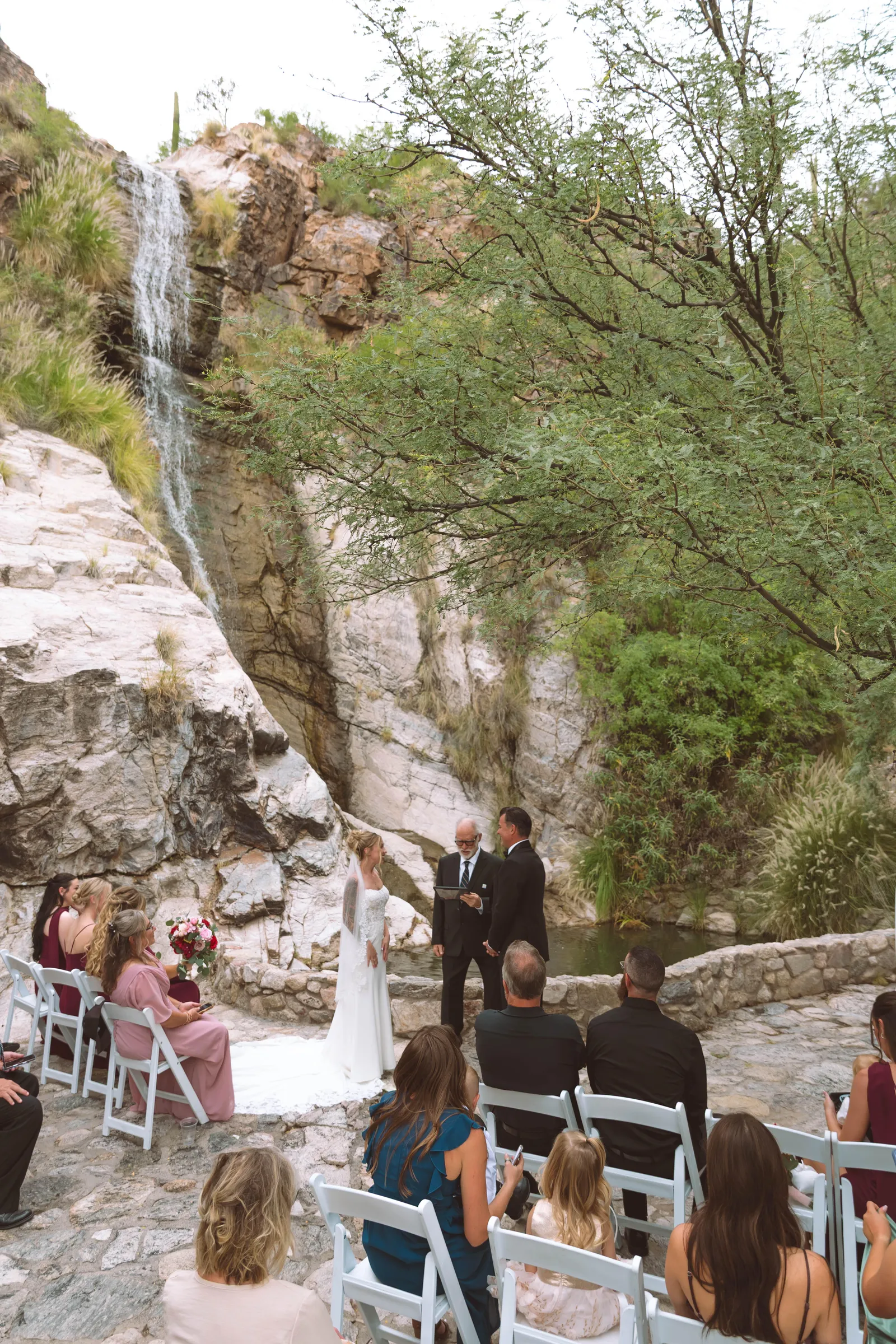
Most readings feel best at around one minute when spoken aloud. That is long enough to create a meaningful pause, but short enough to preserve the attention of the room. A reader who is nervous may speak more slowly than expected, so timing it out loud matters more than counting lines on a page.
Read your finalists in a normal voice, with a pause between paragraphs. Listen for words that feel hard to say, sentences that need an explanation, or an ending that fades rather than lands. The written page can make almost anything seem elegant. The spoken ceremony is where you learn whether it is clear.
If you love a longer passage, look for a complete excerpt with a natural beginning and ending rather than taking a few disconnected lines. A shorter, coherent selection is always stronger than a favorite sentence surrounded by words that no longer make sense. It also gives the reader enough room to breathe and look up from the page.
Match the reading to the person sharing it
A reading is a generous way to include someone important who is not in the wedding party. The right person does not need to be a polished public speaker. They need to feel comfortable enough to speak slowly, be heard, and let the words have their moment.
Think about the relationship as well as the delivery. A grandparent may bring a quiet sense of history to a passage about enduring love. A longtime friend might be perfect for something playful. A sibling may have the right voice for a personal reflection. If a loved one is emotional or not comfortable speaking in front of a crowd, they can still be part of the ceremony through an entrance, a ring handoff, a unity ritual, or a private moment before the processional.
Once you decide, send the final text early. Include the source and title, the rough speaking time, where they will stand, whether there is a microphone, and when they will be cued. At the rehearsal, let them walk through the handoff. This small preparation is what lets the moment feel calm instead of rehearsed.

Use a final checklist before you say yes
Before a reading earns its place, test it against the rest of your plans. Read it out loud together. Imagine it in the actual setting, with guests, music, nerves, and a little wind. Then ask whether it makes the ceremony clearer, warmer, or more recognizably yours. If it only feels impressive on a screen, it may not be the right choice for the room.
- It sounds like us.The tone feels natural for your relationship, whether that means tender, funny, simple, or reflective.
- It has one clear job.The reading adds one idea to the ceremony instead of trying to cover your whole history together.
- It is easy to hear.The reader can say it slowly and clearly in about a minute, with an ending that feels complete.
- It belongs in the flow.You know whether it leads into the vows, offers a pause after the welcome, or supports another moment in the ceremony.
- Everyone knows the plan.Your reader has the final text, a cue, and a simple rehearsal plan before the wedding day.
If you are still stuck, return to the broader guide to choosing a wedding ceremony reading and compare your finalists by the feeling they create. Couples who are including personal promises can also use the wedding vow-writing guide to make sure the reading supports the words they want to say to each other. The pieces do not need to match perfectly. They only need to feel like they belong in the same room.
A small ceremony can be especially well served by one thoughtful passage. For an intimate celebration, explore the flexibility of Tucson elopement packages and keep the reading close to the vows. For a larger gathering, a wedding ceremony package can make room for a reader, music, a family ritual, and a rehearsal without making the experience feel crowded.
Be thoughtful about copyright and printing
A modern poem, song lyric, book excerpt, or film quotation may be protected by copyright even when it is easy to find online. The U.S. Copyright Office explains that literary, musical, and dramatic works receive copyright protection. That is especially worth considering if you want to print the full text in a program, post it to a wedding website, or share it widely after the ceremony.
A practical path is to name the title and author in the program, use an original reading, request permission when appropriate, or choose a work you know is in the public domain. For the ceremony itself, discuss the plan with your officiant if you have any questions about wording, venue rules, or cultural tradition. A little clarity early keeps the day focused on the people in front of you.
Let the reading support, not carry, the ceremony
A reading is one beautiful part of the ceremony, not the whole thing. Your welcome, your personal vows, the ring exchange, and the pronouncement each have their own emotional work to do. When the whole ceremony has a clear shape, one brief passage can feel much more powerful than a long collection of words.
Edward helps couples across Tucson, Marana, Oro Valley, and Vail find the right place for readings, stories, and personal details. Whether you want a simple secular ceremony or a larger celebration with several people involved, the goal is the same: a ceremony that feels welcoming, clear, and unmistakably yours.
Words that belong to you
Build a ceremony with room for the people and ideas you love.
Plan the reading, the flow, and the practical details with a calm guide who keeps the focus on the two of you.
Check availabilityCommon questions
Non-religious wedding readings FAQ
What makes a wedding reading non-religious?
A non-religious reading does not rely on scripture, prayer, or a faith-based blessing. It can be a poem, a short piece of prose, a personal reflection, or words written for the couple. The important part is that it reflects the values and story you want to share.
How long should a non-religious wedding reading be?
About one minute is a comfortable target for most ceremonies. That gives the reader enough time to create a meaningful pause without taking attention away from the vows and ring exchange. Reading the selection aloud at a calm pace is the best way to check its length.
Can we write our own wedding reading?
Yes. A short original reflection from a parent, friend, sibling, or the couple can be a wonderful choice. Keep it focused on one idea, such as friendship, home, resilience, or the way you care for one another, rather than trying to tell your whole history.
Can we use song lyrics or a book excerpt in our ceremony?
You can choose meaningful words for the ceremony, but modern lyrics, poems, and book excerpts may be protected by copyright. If you plan to print the full text in a program or post it online, confirm permission or choose an original or public-domain selection.
Keep planning
Related posts

Ceremony planning
Wedding Ceremony Readings: How to Choose One
A thoughtful way to choose a wedding ceremony reading, invite the right person to share it, and make the moment feel like part of your story.
Read the guide →
Ceremony planning
How to Write Wedding Vows That Sound Like You
A calm, practical way to write personal wedding vows, from finding the right memories to delivering promises that feel true to you.
Read the guide →
Ceremony planning
Do Vows or Rings Come First? A Simple Ceremony Guide
Learn the usual order for vows and rings, why it works, and how to make your wedding ceremony feel natural and personal.
Read the guide →